By: Irene van Oorschot
To cite this post: van Oorschot, I. (2026) Resilience. In: Roots for a Critical Forest Lexicon, https://foragenetwork.org/2026/03/06/resilience/
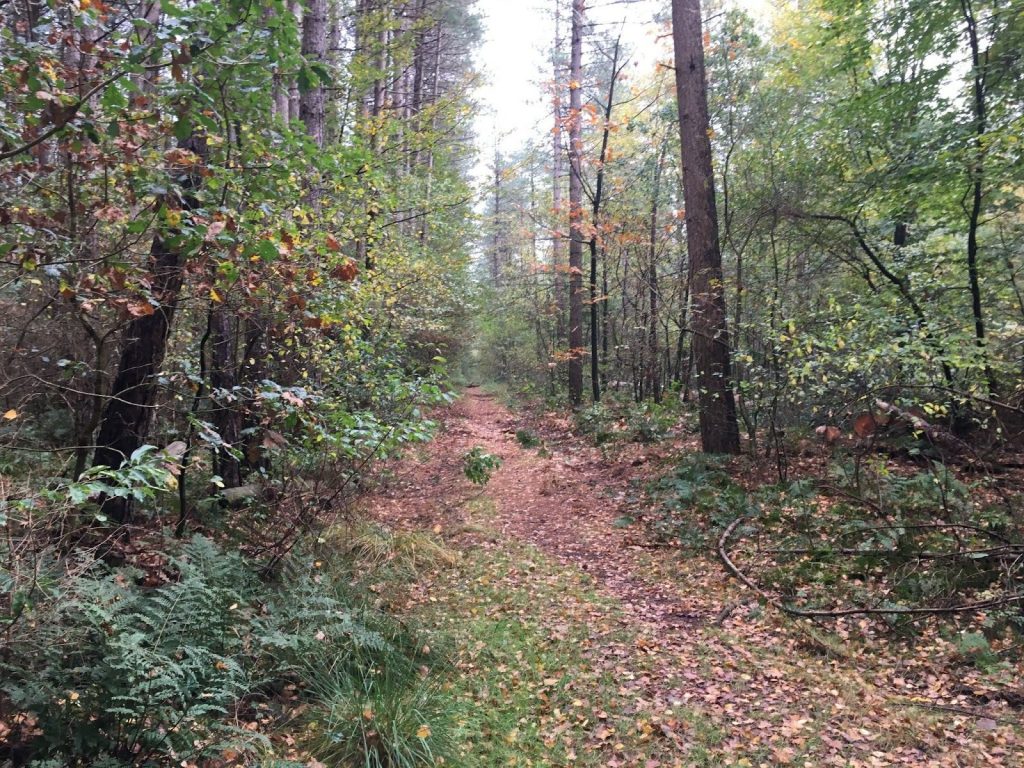
Big question: how can social scientists productively and critically engage with the proliferating, if fuzzy notion of forest resilience and meaningfully intervene in ongoing conundrums in forest policy and practice?
Forests have come to occupy a central place in contemporary imaginaries of planetary survival. International initiatives such as the Bonn Challenge, the UN Restoration Declaration, and the EU Forest Strategy for 2030 cast forests, often described as the lungs of the Earth and essential carbon sinks, as key allies in sustaining a liveable planet. Yet these ecosystems are themselves increasingly under strain. Climate change is accelerating the spread of invasive species and plant pathogens (Patacca et al. 2023), while prolonged droughts are heightening the risk of large-scale wildfires across Europe, especially in Mediterranean regions (El Garoussi et al. 2024). Against this backdrop, the notion of resilience has gained prominence as a way of thinking about how forests might withstand and adapt to such pressures while continuing to provide the ecosystem functions and services on which human and nonhuman life depends.
At the same time, resilience is far from a stable or unambiguous concept (Grove 2018; Davidson et al. 2016). In ecological science, the term originally referred to the capacity of ecosystems to absorb disturbances such as drought, flooding, or disease, and reorganize in their aftermath (Holling 1973). This perspective rejects the idea of ecosystems as stable equilibria, instead emphasizing their dynamic and constantly shifting character. Yet resilience has gradually taken on a broader normative charge. It increasingly operates as a horizon of governance and intervention: a promise that ecosystems can continue to sustain valued functions and services even under conditions of mounting environmental stress (Burton 2025; Cantarello et al. 2024). Frequently associated with visions of ‘holistic biosphere stewardship’ (Folke et al. 2016), resilience is often invoked as an unquestioned good, capable of securing the ecological, economic, and social value attributed to forests. As a result, the focus in contemporary forest science and management is on how resilience should be conceptualized, measured, and cultivated through particular forms of forest management (Nikinmaa et al. 2022; Cantarello et al. 2024; Burton 2025).
For social scientists, however, the concept of resilience does not primarily evoke technical, measurement, or management conundrums. Instead, the concept of resilience has attracted extensive critical scrutiny. As the concept of resilience travels across disciplines, institutions, and scales, it has attracted sustained critique. Scholars have argued that its emphasis on maintaining the survival of systems can obscure the uneven social and historical drivers of ecological degradation (Vardy and Smith 2017: 175), potentially reinforcing rather than reducing human pressures on environments (Chandler 2019). From this perspective, the ‘environmentality’ (Agrawal 2005) associated with resilience may function as a form of neoliberal governance that normalizes a laissez-faire ‘business as usual’ approach (Vardy and Smith 2017), in which ecosystems are expected to recover from disturbances largely produced by human activity. Other critics point to the technocratic and depoliticizing tendencies that often accompany resilience thinking. In their view, the concept frequently sidelines the social, economic, and political dynamics that shape environmental change, instead framing ecological challenges as technical problems of management and adaptation (Bahadur and Tanner 2014; Garcia et al. 2022; Fabinyi et al. 2014; Kull et al. 2016).
The social scientific study of resilience in forest contexts is currently, however, in its infancy. Important contributions to discussions of resilience, pursued especially by Nikinmaa and colleagues, have done crucial work in emphasizing differing conceptions and definitions of resilience (Nikinmaa et al. 2020), and have made efforts towards translating it into recommendations for practice (Nikinmaa et al. 2023). Further radicalizing these insights – that is, going to the roots, the radix, of the issue – social scientists are well equipped to contribute meaningfully to current problematizations of resilience. After all, forests are highly contentious terrains of political, economic, and cultural relevance and struggle: they are both political and multiple. They are highly political in that they are the locus of a high variety of contrasting political agendas, processes of capital accumulation, cultural practices, and social needs (Peluso and Vandergeest 2020; Vandergeest and Peluso 2015, Ekers 2015; van der Woud 2021; Brockhaus et al. 2021, Kosek 2006). Contemporary developments within and beyond Europe show a decided trend towards forest commodification and privatization (Devine and Baca 2020), resulting in the development of new forest frontiers of value extraction (Konczal and Asselin 2025). Meanwhile, forests are increasingly cast as crucial fixes to the broader troubles of living in and amidst climate crisis, with national governments increasingly prizing them for their carbon sequestration function (Kellokompu 2021; Turnhout and Lynch 2024). Forests are also multiple in that what comes to count as forest to begin with is a function of legal classifications, policy designations, scientific knowledge practices, and cultural logics (Gabrys et al. 2025). And in this capacity they are sites of significant social struggles (Nousiainen and Mola-Yudego 2022), with activists, peasant and indigenous communities having deep stakes in what forests could and should be.
What happens within these complex entanglements of societal dreams and ambitions, economic modes of valuation and extraction, and local human-forest interdependencies as the notion of resilience turns from a descriptive notion into a widely articulated, normative goal? How are pronounced value conflicts about what forests are and should be navigated in concrete efforts to promote resilience? Here, social scientists, particularly those with deep familiarity of specific forest worlds, have an important role to play. Rather than assuming to know what resilience is, or seeking to define it and measure practices against a given standard, social scientists may instead be inspired to pursue what elsewhere I have called a pragmatic respecification (van Oorschot 2021): a way of asking questions about fuzzy concepts that does not seek to stabilize their meaning, but rather probes how they are done in practice, and what is done with them in sites of significant contestation and struggle. With this pragmatic sensibility, it becomes possible to approach resilience not only as a matter of technical definitions or management questions, but to highlight institutional, political, and ecological practices and realities as these are negotiated and transformed within Europe’s contested and highly diverse forest worlds.
This approach brings questions of value and valuation into view (Rogers et al. 2020), for instance: what are the implicit normativities at work in efforts to promote resilience? What conceptions of the good forest, good trees, good management, and good governance are at stake, and which are glossed over or pushed aside? For whom is resilience a solution exactly, and whose needs, stakes, and forest relations are neglected? A pragmatic respecification also allows us to probe how resilience operates in political and institutional landscapes, where it may contrast or articulate with longer standing forestry traditions. In some sites, appeals to forest resilience may be at odds with a powerful forestry sector (such as those in Sweden or Finland) while in other sites it may instead become a strategic way for State forest managers to flexibly position themselves with a broader neoliberalization of forest governance. Indeed, pragmatically respecifying the concept of resilience also means being attuned to variation and difference across Europe’s forest worlds, with contrasting constellations of political, economic, and local stakeholders contributing to the production of diverging varieties of resilience.
Thinking along with recent developments in multispecies theorizing (Munster et al. 2021; Chao et al. 2022; Tsing 2015; Konczal 2017, Kohn 2013, Matthews 2018) furthermore, it also becomes possible to consider the more-than-human biopolitics (Biermann and Anderson 2017) of resilience as particular trees or forests are declared to be unfit for the future or indeed ‘future-proof’, while it also allows us to consider where forests in all their multispecies liveliness push back against human hopes and designs. Meanwhile, up-close observation of forest-based practices will be a crucial ‘rubber boots method’ (Bubandt et al. 2022) to trace the socio-ecological life of resilience as it is enacted in concrete multispecies worlds through practices of diversification, felling, planting, regeneration, and the modes of management, intervention, and care that characterize them (van Oorschot 2024). Crucially, the above questions can help us consider if, to cite Sophie Chao, there can be justice here (2021). Where and how does the language and practice of resilience open up space to imagine forests in more than economic terms? Under what conditions do appeals to resilience allow for the tentative, perhaps uncertain, flourishing of human and nonhuman life? As European forests are confronted with the limits of anthropocentric forms of control, can resilience be part of the solution – and if not, how do we imagine and practice alternatives?
Irene van Oorschot is assistant professor at the Public Issues and Imaginaries Team at the Erasmus School of Social and Behavioral Sciences, Erasmus University Rotterdam.
Works Cited
Agrawal, A. (2005) Environmentality: Technologies of Government and the Making of Subjects. Durham, N.C.: Duke University Press.
Bahadur, A. V., M. Ibrahim and T. Tanner, T. (2013). Characterising resilience: unpacking the concept for tackling climate change and development. Climate and Development, 5(1), 55–65.
Bahadur, A., & Tanner, T. (2014). Transformational resilience thinking: putting people, power and politics at the heart of urban climate resilience. Environment & Urbanization, 26(1), 200-214.
Biermann, C. and R. M. Anderson (2017) Conservation, biopolitics, and the governance of life and death. Geography Compass 11(10) e12329
Bollettino, V., Alcayna, T., Dy, P., & Vinck, P. (2017) Introduction to Socio-Ecological Resilience. Oxford Research Encyclopedia of Natural Hazard Science. Oxford University Press.
Brockhaus M, M. Di Gregorio, H. Djoudi, M. Moeliono M, T. T. Pham, G. Y. Wong (2021) The forest frontier in the Global South: Climate change policies and the promise of development and equity. Ambio. 50(12):2238-2255.Bubandt, N., Oberborbeck Andersen, A., & Cypher, R. A. (Eds.). (2023). Rubber Boots Methods for the
Anthropocene: Doing Fieldwork in Multispecies Worlds. University of Minnesota Press.Burton, P. (2025). Resilient Forest Management. Oxford University Press.
Cantarello, E., J. B. Jacobsen, F. Lloret (2024) Shaping and enhancing resilient forests for a resilient society. Ambio 53: 1095–1108.
Chandler, D., K. Grove, and S. Wakefield (2020) Resilience in the Anthropocene: Governance and Politics at the End of the World. Routledge.
Chao, S. (2021). Can there be justice here? Indigenous perspectives from the West Papuan oil palm frontier. Borderlands, 20(1), 11–48.
Chao, S., K. Bolender, and E. Kirksey (2022) The Promise of Multispecies Justice. Durham/ London: Duke University Press
Davidson, J, C. Jacobson, A. Lyth, A. Dedekorkut-Howes, C. Baldwin, N. Holbrook, M. Howes, S. Serrao-Neumann, L. Singh-Peterson and T. Smith (2016). Interrogating resilience: Toward a typology to improve its operationalization. Ecology and Society 21(2): 27-43
Devine, J. and J. Baca (2020). The Political Forest in the Era of Green Neoliberalism. Antipode. 52: 911-927
El Garroussi, S., F. Di Giuseppe, and F. Wetterhall (2024). Europe faces up to tenfold increase in extreme fires in a warming climate. Climate and Atmospheric Science 7(30): 1038-
Fabinyi, M., L. Evans, and S. J. Foale (2014). Social-ecological systems, social diversity, and power: insights from anthropology and political ecology. Ecology and Society, 19(4): 28-40
Gabrys, J., M. Westerlaken, M., K. L. Hood, Y. Fatimah and T. Simlai (2025). The Forest Multiple: Composing and digitalizing wooded worlds. Environment and Planning F, 4(2), 83-92.
Garcia, A., N. Gonda, E. Atkins,N. J. Godden, K. P. Henrique, M. Parsons, P. Tschakert, P., and G. Ziervogel (2022). Power in resilience and resilience’s power in climate change scholarship. WIREs Climate Change, 13(3), e762.
Grove, Kevin. (2018). Resilience. Routledge.
Holling, C. S. (1973), Resilience and Stability of Ecological Systems. Annual Review of Ecology and Systematics, 4:1-23.
Kellokumpu, V. (2021). The bioeconomy, carbon sinks, and depoliticization in Finnish forest politics. Environment and Planning E: Nature and Space, 5(3), 1164-1183.
Kohn, E. (2013) How Forests Think. University of California Press.
Konczal, A. A. (2017). Telling (hi)stories in the Anthropocene: When forest is multispecies relation. In E. Kavalski, S. Hobden, & E. Cudworth (Eds.), Posthuman dialogues in international relations (pp. 53–67). Routledge.
Kosek, J (2006) Understories: The Political Life of Forests in Northern New Mexico. Durham: Duke University Press, 2006
Kull, C. A. and H. Rangan (2016) Political ecology and resilience: competing interdisciplinarities? In Interdisciplinarités entre Natures et Sociétés: Colloque de Cerisy, edited by Hubert, B & N Mathieu. Bruxelles: P.I.E. Peter Lang, 71-87.
Mathews, A. S. (2018) Landscapes and Throughscapes in Italian Forest Worlds: Thinking Dramatically about the Anthropocene. Cultural Anthropology 33(3): 386–414.
Münster, U., T. van Dooren, S. A. Schroer, and H. Reinert. (2021) Multispecies Care in the Sixth Extinction. Theorizing the Contemporary, Fieldsights, January 26.
Nikinmaa, L., M. Lindner, Marcus, E. Cantarello, A. Jump, R. Seidl, G. Winkel, and B. Muys (2020). Reviewing the Use of Resilience Concepts in Forest Sciences. Current Forestry Reports. 6: 61-80.
Nikinmaa, L., M. Lindner, E. Cantarello, B. Gardiner, J. Jacobsen, Jette, A. Jump, C. Parra, T. Plieninger, A. Schuck, R. Seidl, T. Timberlake, K Waring, G. Winkel, B. Muys (2023). A balancing act: Principles, criteria and indicator framework to operationalize social-ecological resilience of forests. Journal of Environmental Management. 331: 117039
Nousiainen, D. and B. Mola-Yudego (2022). Characteristics and emerging patterns of forest conflicts in Europe – What can they tell us? Forest Policy and Economics. 136:102671.
Peluso, N. and P. Vandergeest (2020). Writing Political Forests. A Radical Journal of Geography. 52(4): 1083-1103
Konczal, A. and J. Asselin, Jodie. (2025). Exploring the Green Frontier within Europe’s Recent Forest Initiatives. Geoforum. 160:104242
Rogers, P., J. Bohland, and J. Lawrence . (2020). Resilience and values: Global perspectives on the values and worldviews underpinning the resilience concept. Political Geography. 83:102280
Tsing, A. (2015) The Mushroom at the End of the World: on the Possibility of Life in Capitalist Ruins.Princeton University Press.
Vandergeest, P and N. Peluso. (2015) Chapter 12: Political forests in The International Handbook of Political Ecology, ed. R. L. Bryant, Elgar, 162-175,
van Oorschot, I. (2024). Forest Futures in the Making: Legal Infrastructures and Multispecies Speculation in Planning Climate-Adaptable Forests. Tecnoscienza – Italian Journal of Science & Technology Studies, 15(2), 83–102.
Van Oorschot, I. (2021) The Law Multiple: Judgment and Knowledge in Practice. Cambridge: Cambridge
University Press. Vardy M. and M. Smith (2017) Resilience. In: Environmental Humanities 9(1): 175-179.
 FORAGE: FOREST ANTHROPOLOGY WORKING GROUP ON EUROPE AND BEYOND
Leave a comment